
Experiments in Shanghai
The Wan brothers’ early experiments helped establish Chinese animation. Works such as Uproar in the Studio belong to this formative period of drawings, live action and frame-by-frame invention.
Xinhua / Guangming DailyStart with a story you love. Explore Chinese animation through its history, genres and classics, one viewing path at a time.
Choose a first watch Explore the historyThree quick choices. A few stories to make your own.
An English-language field guide by Atlas Editorial
Reviewed 11 October 2026Selected milestones, from early experiments to today’s many voices. Production, release and festival years can differ.
The Wan brothers’ early experiments helped establish Chinese animation. Works such as Uproar in the Studio belong to this formative period of drawings, live action and frame-by-frame invention.
Xinhua / Guangming DailyPrincess Iron Fan adapts an episode of Journey to the West. BIFAN identifies the Wan brothers’ wartime production as Asia’s first feature-length animated film.
BIFANShanghai Animation Film Studio becomes independent in 1957. Ink painting, cutout and folded-paper experiments develop alongside drawn animation. Tadpoles Look for Mother and Havoc in Heaven offer two different windows into this period.
British Film Institute Shanghai International Film FestivalNezha Conquers the Dragon King dates to 1979 and appears in Cannes’ 1980 programme. Black Cat Detective arrives in 1984. The landscape includes ambitious features, short films and television adventures.
Xinhua / Guangming Daily Festival de Cannes iQIYIPleasant Goat begins in 2005; The Legend of Qin follows in 2007. Later, esports stories and large fantasy worlds find room in animation, represented here by The King’s Avatar and Soul Land.
Sparkly Key Animation Creative Power Entertaining China LiteratureCultivation, contemporary mystery and historical poetry coexist. A Mortal’s Journey, Link Click and Chang An are three different entry points. This is a map of selected milestones, rather than a single style that replaced everything before it.
Bilibili Crunchyroll All Rights Entertainment11 paths into donghua. These are editorial groupings: genres overlap, and recent entry points sit alongside established classics.
Choose a path below, then open its classics when you are ready.

Stories reinterpret gods, legendary heroes and familiar tales. A new adaptation can change the viewpoint, relationships and tone while retaining recognisable figures.
For legendary heroes and imaginative worlds.
Sun Wukong’s rebellious adventures bring the Monkey King into conflict with heaven. The original film was made in two parts: the first released in 1961, the second completed in 1964.
Why start hereAn entry into an enduring Monkey King adaptation and its expressive visual world.
Look for the original two-part version; the 2012 3D edition is a different presentation.

The young mythic hero Nezha confronts the dragon kings in a drawn animated retelling. This version predates the contemporary Ne Zha films and has its own character relationships.
Why start hereA useful first comparison between a classic adaptation and later interpretations.
Choose the 1979 animated film, listed as Nezha Nao Hai at Cannes in 1980.
Contains intense scenes and themes of sacrifice; check suitability before family viewing.

The Monkey King and his companions need a magical fan to cross the Flaming Mountains. The Wan brothers turn an episode of Journey to the West into an early animated feature.
Why start hereStart here to encounter the beginnings of Chinese feature animation.
Choose the 1941 film; note the restoration or edition credit.
Martial artists, rival schools and personal codes shape the jianghu, the world of wandering fighters. Skill and loyalty matter; extraordinary combat does not automatically make a story xianxia.
For swordplay, rival schools and difficult loyalties.
Young Tianming travels with the swordsman Ge Nie while the Qin empire pursues them. Rival schools, swordsmanship and difficult loyalties provide the framework for a martial adventure.
Why start hereA route into wuxia through characters, schools and a recognisable historical setting.
Begin with the original first season, The Hundred Steps Flying Sword.
A newer remake has separate production details. The adventure is not a documentary of Qin history.

Cultivation, sects, spiritual advancement and the pursuit of immortality shape the journey. Traditional mythic and Daoist ideas often supply the framework, but each story sets its own rules.
For cultivation journeys and immortal worlds.
Han Li, an ordinary village boy, joins a small sect. Caution and perseverance become his means of surviving a dangerous world and pursuing immortality.
Why start hereMeet sects, cultivation and spiritual advancement through a protagonist learning the rules.
Start at the first 2020 arc. Some official listings offer a retake of early episodes.

A broad fantasy category with invented worlds and power systems, often mixing Chinese-inspired elements with other influences. Progression appears here too, so cultivation alone does not settle a genre label.
For invented powers and a long progression adventure.
Tang San enters a world of Martial Souls and trains to become a soul master. Progression, companions and an invented power system give the fantasy its structure.
Why start hereA clear example of a long fantasy journey built around its own rules.
Start with the original 2018 animated series before Soul Land 2.
A long commitment. Treat its fantasy system as specific to this story.

Unanswered questions, carefully limited information and consequences drive the story. A contemporary setting can combine investigation with supernatural abilities.
For puzzles, emotional stakes and a modern setting.
Cheng Xiaoshi and Lu Guang work at Time Photo Studio, using unusual powers to enter clients’ photographs. Each job creates a mystery with human consequences.
Why start hereA contemporary setting gives mystery lovers an immediate point of connection.
Begin with season 1; save later arcs and spoiler discussions until afterwards.
Intense material. Check the distributor’s content advisories.

Speculative environments ask how people live with technology, catastrophe or a changed world. The focus can be survival, social order, exploration or the unknown.
For speculative worlds and survival stories.
Humanity struggles to survive on an Earth transformed by catastrophe. A survival premise, unfamiliar dangers and ruined landscapes offer a science-fiction path into donghua.
Why start hereChoose this path if you enjoy speculative worlds and the pressures of survival.
Begin with the 2019 first season. Atlas lists its upper and lower halves separately.
A darker, more intense route; check age ratings and content advisories.

A joke can provide the first connection: clear intentions, unexpected results and a well-timed pause. Comic action can coexist with dramatic storylines and an older target audience.
For comic timing and a character to root for.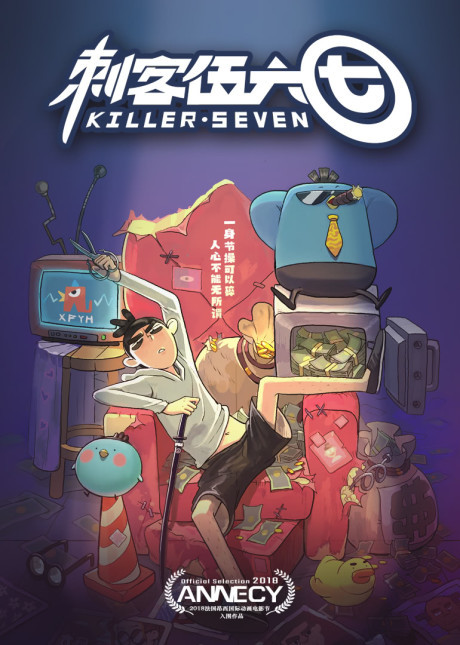
A hairdresser with missing memories tries to work as an assassin, often with unexpected results. The comic setup opens onto a larger struggle between factions.
Why start hereEnter through a joke, readable character intentions and short comic adventures.
Begin with the first season rather than a later arc or compilation.
Comedy and animation do not imply children’s viewing; check your local rating.

Trust, attraction and devotion guide the emotional journey. Romance can share a story with mythology, supernatural adventure or historical settings. Danmei describes a tradition of male–male romance in source literature.
For stories built around a meaningful bond.
Blanca, a young woman who has lost her memories, travels with the snake catcher Xuan to discover her identity. Light Chaser’s film approaches the traditional legend as a prequel.
Why start hereA self-contained film brings romance, identity and supernatural folklore together.
Choose the 2019 animated White Snake before exploring its sequels.
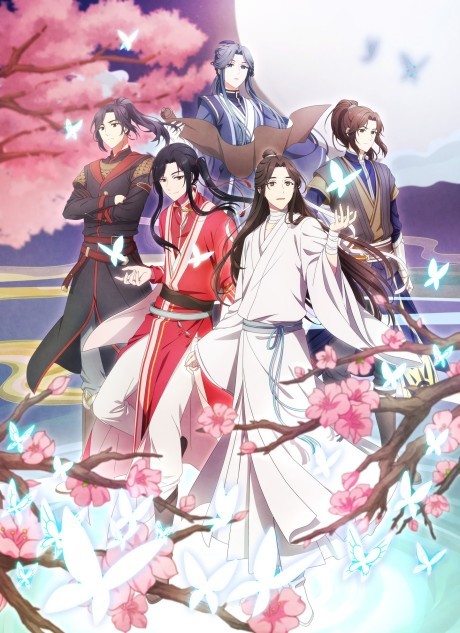
Xie Lian returns to heaven for a third time and meets a mysterious ghost king on a task in the mortal world. Trust and devotion develop within a supernatural journey.
Why start hereFollow emotional relationships into a larger fantasy setting.
Start with season 1. The animation and the source novel are distinct versions.
Adapted from a danmei novel: a tradition of male–male romance. The adaptation presents the relationship in its own way.

Historical settings, people and literature supply the material for a dramatic interpretation. Enjoy the film as a creative work, then compare it with the history or poems that interest you.
For poetry, cultural context and historical characters.
Gao Shi recalls his friendship with Li Bai in a story shaped by Tang poetry, ambition and upheaval. Historical people and literary memory become the material of an animated epic.
Why start hereStart here for culture and poetry rather than a progression-fantasy power system.
Choose the 2023 film, also titled 30,000 Miles from Chang’an.
A dramatic interpretation of history; explore the poems separately afterwards.

Animal characters, recurring adventures and familiar comic situations introduce another part of donghua. The intended audience and local age rating remain separate checks from the genre label.
For television characters shared across generations.
A cat police chief and his animal colleagues investigate cases and protect their forest community. The original five-episode series brings detective adventure into children’s television.
Why start hereA compact introduction to an earlier generation of Chinese television characters.
Choose the original 1984 series, not the later films with similar names.
Some episodes involve danger and animal death; check suitability for younger viewers.

Clever sheep and a determined wolf turn pursuit and escape into recurring comic adventures. The original series introduces characters who continue through many later productions.
Why start hereExplore an influential corner of Chinese children’s television through simple comic setups.
Try the original 2005 series; later franchise installments are separate viewing choices.
Competition, teams and comeback stories create stakes without requiring a mythic background. Distinguish an animated adaptation from live-action productions or game footage with the same title.
For gaming, teamwork and a fresh start.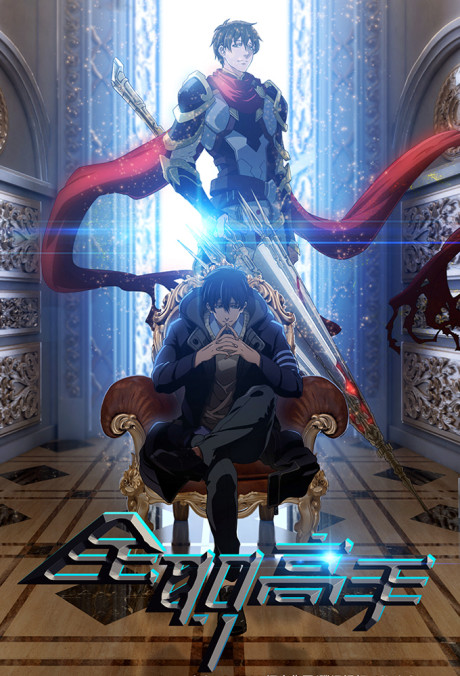
After leaving his professional team, Ye Xiu works at an internet café and begins again in the online game Glory. Competitive gaming becomes the setting for a comeback story.
Why start hereAn approachable route for viewers interested in games, teamwork and competition.
Choose the 2017 animation. A separate live-action series shares the English title.
A genre is a compass. Wuxia, xianxia and xuanhuan have overlapping boundaries. Our fantasy explanations draw on Wuxiaworld’s publisher glossary; the reading paths and “why start here” notes are Atlas editorial suggestions.
Wuxiaworld WuxiaworldMythology is a story category. Ink wash is a visual approach. A film, short or series is a format. Keep these three ideas separate as you explore.

Soft edges, graded tones and open space invite a different kind of attention. An ink-like appearance alone does not verify the production process.

A group of tadpoles searches for its mother in a water-ink world. The BFI connects the film’s artistic approach with the painting of Qi Baishi.
Why start hereA short introduction to soft edges, tone and the relationship between figures and background.
Choose the 1960 short; compare its visual language with Mountain and Water.

An old musician and a young fisherman meet, travel and part. The Annecy archive records the film’s water-ink drawing technique and its Shanghai Animation Film Studio production.
Why start hereWatch how landscape, music and space can carry a short story.
Choose the 1988 short; Annecy’s 1989 date refers to its festival programme.
Separate shapes can move around articulated joints. Cutouts, folded paper and puppets are related possibilities, with distinct processes.
猪八戒吃西瓜
A comic episode drawn from Journey to the West becomes an animated cutout performance. Annecy credits Wan Guchan and connects the work with shadow and puppet theatre traditions.
Why start hereSee how silhouettes, articulated shapes and timing give paper a performance.
Use the 1958 film record to identify the work; it is not yet indexed in Atlas.
Observe line, pose, staging and timing. A drawn image can belong to comedy, mythology, mystery or many other genres.
Sun Wukong’s rebellious adventures bring the Monkey King into conflict with heaven. The original film was made in two parts: the first released in 1961, the second completed in 1964.
Why start hereAn entry into an enduring Monkey King adaptation and its expressive visual world.
Look for the original two-part version; the 2012 3D edition is a different presentation.
A hairdresser with missing memories tries to work as an assassin, often with unexpected results. The comic setup opens onto a larger struggle between factions.
Why start hereEnter through a joke, readable character intentions and short comic adventures.
Begin with the first season rather than a later arc or compilation.
Comedy and animation do not imply children’s viewing; check your local rating.
Dimensional characters and environments offer another set of visual tools. Digital productions can combine approaches; a technique is not a quality ranking.
Young Tianming travels with the swordsman Ge Nie while the Qin empire pursues them. Rival schools, swordsmanship and difficult loyalties provide the framework for a martial adventure.
Why start hereA route into wuxia through characters, schools and a recognisable historical setting.
Begin with the original first season, The Hundred Steps Flying Sword.
A newer remake has separate production details. The adventure is not a documentary of Qin history.
Tang San enters a world of Martial Souls and trains to become a soul master. Progression, companions and an invented power system give the fantasy its structure.
Why start hereA clear example of a long fantasy journey built around its own rules.
Start with the original 2018 animated series before Soul Land 2.
A long commitment. Treat its fantasy system as specific to this story.
Three ways to begin. Choose by your available time and curiosity, then save a title to your watchlist.
Choose a self-contained story and leave the longer series for another day.
Start with a romantic folklore feature.
Explore this choiceTry poetry and historical storytelling on another evening.
Explore this choiceCompare a modern feature with an older visual tradition.
Explore this choiceCheck the version note and official platform listing. Subtitles and availability depend on your region.
The terms and practical questions you are likely to meet on your first watch.
Donghua means animation in Chinese; international viewers often use it for Chinese animation. It includes many genres, formats and intended audiences. Use a synopsis and the local age rating to choose a work.
Wuxia centres on martial heroes and their codes. Xianxia often centres on cultivation and immortality. Xuanhuan allows broad invented fantasy worlds and power systems. The boundaries overlap; these are helpful reading guides rather than universal rules for every production.
Genre describes the kind of story. Technique describes how the images are made. Format describes a short, a film or a series. Keep all three questions separate when choosing your first watch.
Manhua means comics. Danmei refers to male–male romance in Chinese fiction. Danmu are viewer comments overlaid on a video. Nianfan refers to a year-spanning release format; it is not a genre or a promise of uninterrupted releases.
Open the title’s Atlas page and check its official platform links. Availability, subtitles and release dates differ by region and edition. A source citation identifies a work; it does not guarantee local playback. Check the distributor before starting.
Production, festival screenings, restorations and international releases can have different dates. Havoc in Heaven also has two original parts. This guide uses original production or first-series years where verified, with version notes to help you identify the intended work.
Explore the catalog, save your first watch, and share your discoveries.
Film archives, festivals, studios, publishers and official distribution listings support the history and work descriptions. Story groupings and viewing suggestions are original Atlas editorial choices. Source links identify works and editions.